Power to Decide, in partnership with the Guttmacher Institute, launches our new Contraceptive Access Maps!
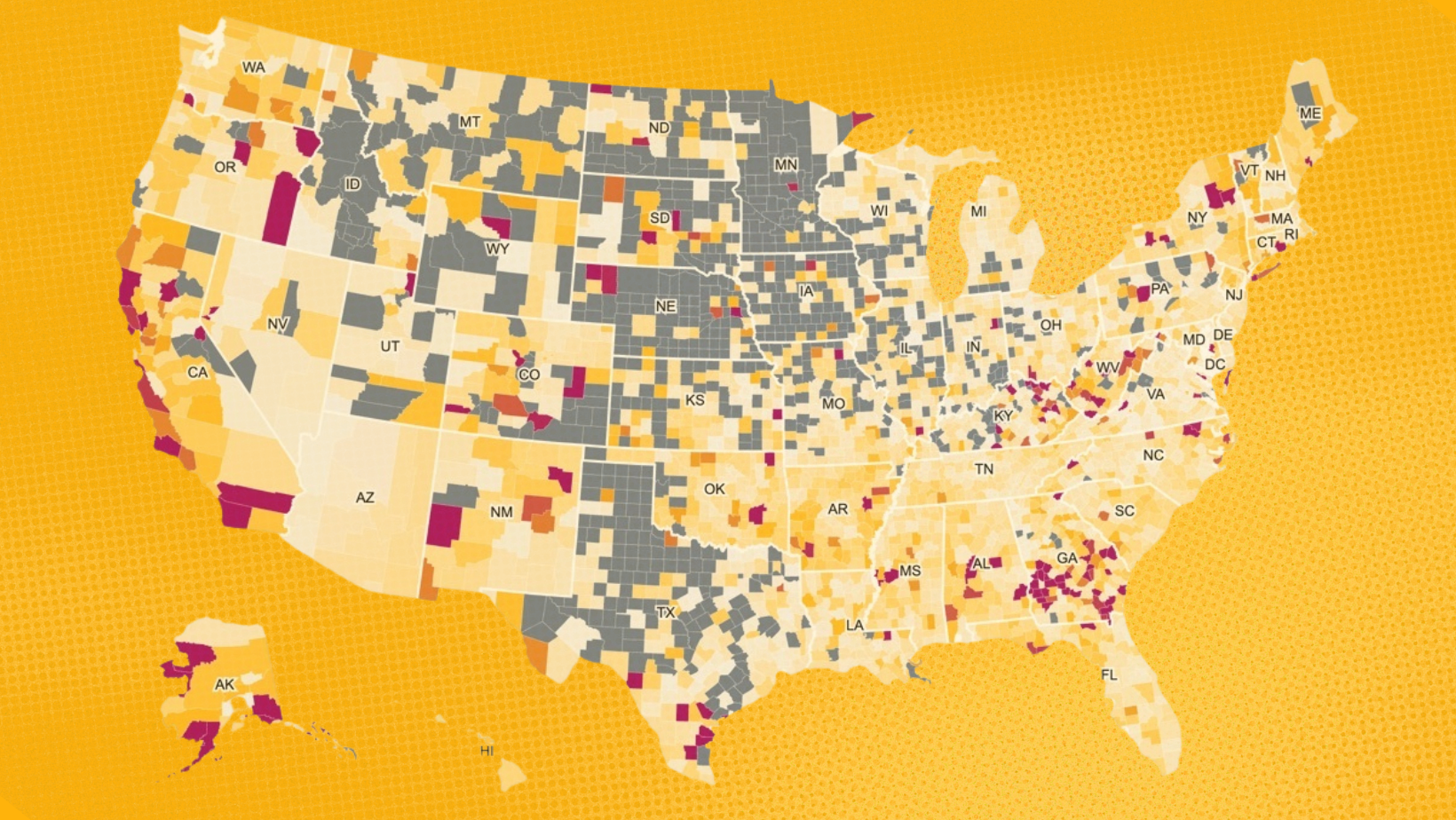
We're launching the new Contraceptive Access Maps in partnership with the Guttmacher Institute. For nearly a decade, Power to Decide's Contraceptive Desert Map has helped advocates, policymakers, and researchers understand gaps in contraceptive access across the United States. But access to care has changed, the data available to measure it has improved, and our understanding of what meaningful access looks like has evolved. Our new Contraceptive Access Maps are a more rigorous, person-centered approach to measuring access to publicly funded contraceptive care.
What the maps show
These maps showcase contraceptive access gaps, referring to a county where there are more women* in need of low- or no-cost contraceptive care than the clinics in the county can serve.
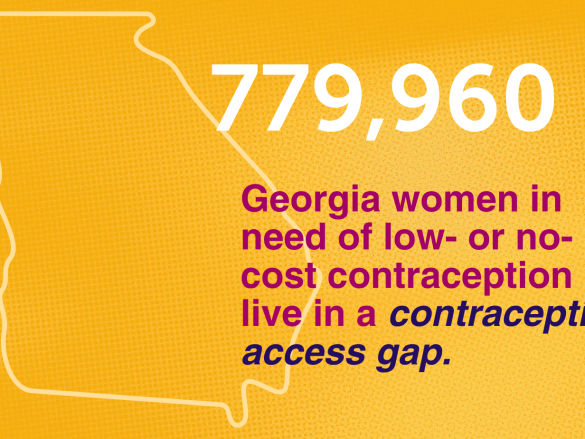
New data from Power to Decide and Guttmacher shows that 21.4 million women of reproductive age in the U.S. in need of low- or no-cost contraception live in a county with a contraceptive access gap. Out of these 21.4 million women in need:
- Almost 75% (15.7 million) live in a county with an extreme access gap — where service availability meets only 25% or less of the need.
- Over 1 million live in a county without a single publicly funded health center offering any contraceptive care.
- 1.9 million live in a county without access to a health center that offers the full range of birth control methods.
Now live: The new Contraceptive Access Maps.
What exactly has changed?
We’ve made changes to better showcase gaps in contraceptive access and to respond to concerns about terminology. We heard from many of our partners that calling a county a contraceptive “desert” was both inaccurate and potentially stigmatizing. The term can imply that limited access to contraceptive care is naturally occurring rather than the result of policy decisions, funding limitations, and other structural factors. And — as Indigenous scholars have long said — deserts are thriving ecosystems, not wastelands. In response, we are bringing new language to our mapping work and retiring the term “contraceptive deserts.”
In addition to updating our language, we’ve updated our data sources and methodology. The previous approach relied on a fixed clinic-to-population threshold (less than one clinic per 1,000 women in need) and an outdated definition of contraceptive need (at risk of unintended pregnancy). The new methodology instead estimates gaps, or alignment, in clinic service availability and the number of women in a county with a self-defined need for contraception who likely need public funding for this care. We estimate service availability by calculating the average annual patient caseload that a publicly funded health center can serve, which varies by county and clinic type (Planned Parenthood, health department clinic, etc.). We compare this to the number of women in a county with a self-defined need for contraception to get the level of access gap.
We have also opted to now include two views of access:
- Alignment between availability of publicly funded health centers providing any contraceptive care and women’s* need for this care.
- Alignment between availability of publicly funded health centers that offer the full range of birth control methods and women’s need for contraception.
You can read more about each of the data source updates here.
The change reflects a fundamental shift in how we understand and measure contraceptive access.
We believe this new approach and the partnership with Guttmacher will bring more rigor to our maps and a compelling, accurate depiction of access to publicly funded contraception across the country.
The Contraceptive Access Maps look quite different than our previous iterations. Importantly, because both the underlying data and methodology have changed, the Contraceptive Access Maps should not be interpreted as a continuation of the previous Contraceptive Desert Map. Differences between the two tools reflect methodological changes as much as — or more than — actual changes in access.
While we are proud of the improvements to this map, we know it is only one way to look at access. It is important to be clear that this is a gap in access to publicly funded brick-and-mortar clinics. As with the previous maps, we do not account for over-the-counter (OTC) methods, pharmacy provision, or telehealth. As with the previous maps, we acknowledge that the presence of a clinic alone does not mean people have access to contraception, and other factors, such as lack of transportation, are still major barriers to access for many people. Finally, like most county-level measures, the maps cannot fully account for people traveling across county lines for care.
Using data as the foundation for our work
The Contraceptive Access Maps are more than a new research tool. Power to Decide grounds our efforts in this data, and as reproductive health care programs face ongoing challenges, reliable data is more important than ever. We hope these maps will help advocates, providers, researchers, and policymakers identify opportunities to strengthen access in communities across the country.
The network of publicly funded health centers plays a critical role in helping people access contraception that aligns with their needs, preferences, and circumstances. Understanding where that network is strong — and where it falls short — is an essential first step toward ensuring everyone can get the care they need.
Power to Decide remains committed to a future where every person has access to high-quality contraceptive care, no matter where they live, thanks to your support. The Contraceptive Access Maps help illuminate the path forward, giving us the information we need to focus resources, support communities, and close access gaps nationwide.
*While we use the term "women" to align with our data sources, which do not always collect information about sex or gender consistently, we recognize that contraception is used by people with diverse gender identities. Every person, regardless of their sex or gender identity, deserves access to the contraceptive care that meets their needs and preferences. Where possible, we use gender-inclusive language to represent cisgender women, transgender men, nonbinary people, and other gender diverse people who need and use contraception.