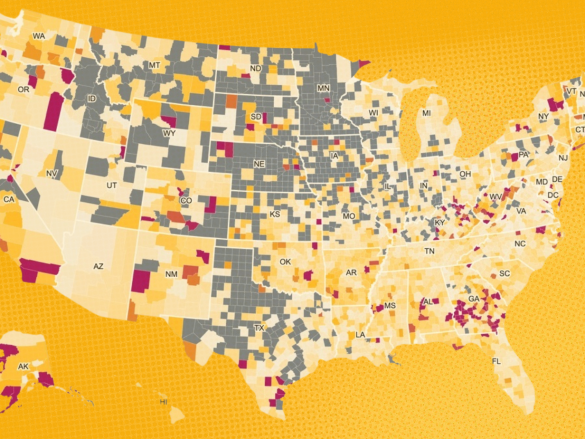
The current initiative is only one way of looking at access: a county-level view of the extent to which available clinics offering either any contraceptive care or specifically the full range of birth control methods at low or no cost are aligned with women’s contraceptive needs.
The map doesn’t depict the population of people who, regardless of financial need, trust and rely on these health centers. Included in this group are people who may choose not to use their insurance for privacy reasons, travel outside their area to keep their contraceptive use private from a partner—a common situation tied to birth control sabotage or coercion—or need a provider who speaks their language or offers hours that fit their work schedule. All people should be able to access care in line with their needs and preferences without significant barriers.
In addition, our analysis of county-level access is limited in that it does not fully represent one’s proximity to a health center. For many, the presence of a clinic, even in their county, does not translate into access. In many areas of the country, a high percentage of people lack access to a vehicle or other form of transportation.
We also only count brick-and-mortar clinics and do not account for services provided via telehealth, or online birth control providers, or at pharmacies. We cannot account for contraceptive methods, like condoms or Opill, that are available over-the-counter.
Additional data limitations:
A limitation of our approach is using data from different years for the numerator and denominator. Because of the effort and time involved in collecting and analyzing data from health centers across the country, 2020 is the most recent data we have on caseload averages. Given the rapidly shifting nature of care, our caseload averages from 2020 may no longer reflect clinic service availability.
There may be limitations to our patient caseload averages. To calculate the caseload averages, we grouped clinics into three categories to align Power to Decide and Guttmacher’s data: Planned Parenthoods, Health Departments, and other clinics that provide contraceptive services (this includes all other clinics in our database such as FQHCs and independent organizations that receive Title X funds). In particular, the “other” category may over- or underestimate network availability. We have tried to alleviate this concern by drawing on county-specific caseload averages to more closely estimate availability specific to county contexts.
Finally, our distance adjustment is an approximation with notable limitations. We estimate the distance to the nearest clinic from a county's land area and clinic count rather than from actual clinic locations, so the adjustment captures the general relationship between clinic density and travel burden rather than any individual's true travel distance. It also assumes a single federal distance standard for each urbanicity type and does not account for variation in road networks, terrain, or the distribution of clinics within a county.